
Free Facebook Group vs Paid Community: The Honest Math for Coaches
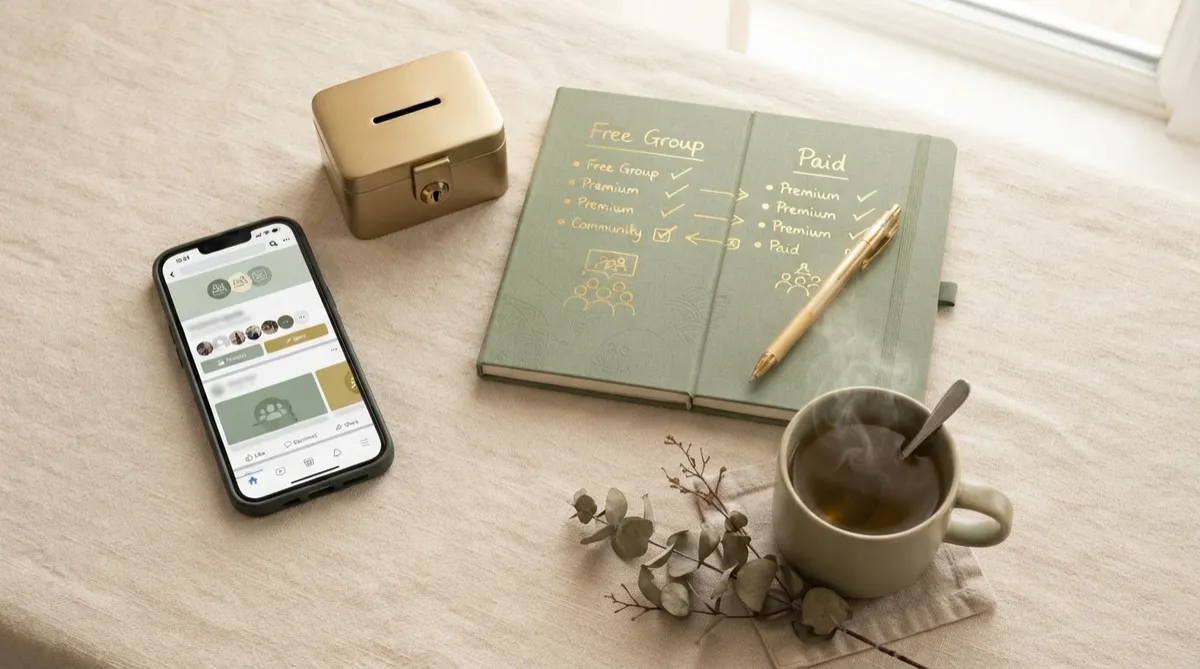
The free-group-versus-paid-community question comes up constantly, and the answer surprises people: for most coaches, the right move is both, in the right order. A free Facebook group first, a paid community once the free one is thriving.
The free group's job
A free group is your audience-builder. Its job is reach, trust and conversation, the things that fill your pipeline. It is where strangers become familiar, and familiar becomes a booking. You do not monetise it directly. You monetise what it produces.
The paid community's job
A paid community is a product. It is the deeper experience for people who already trust you, the ones who came through your free group, booked a call, and want more. Launching it before you have the audience is why most paid communities quietly close within a year.
The honest math
- A free group of 800 engaged ideal clients, maybe 2-4% will pay for a deeper experience.
- That is 16-32 paid members, a real community with real revenue, because it is built on a real audience.
- Skip the free group and launch paid to 50 strangers, most never renew.
The system that makes both work
The Coaching Client System is what turns the free group into the pipeline that funds the paid one. RMM helps you keep track of every conversation, from free-group comment to booked call to client. So by the time you are ready to launch a paid community, you already have the audience to fill it.
Build the audience for free. Keep it moving with a system. Then, maybe, charge for the room.
Feeling stuck on any of this? A quick, no-pressure 15-minute call is the easiest way to get unstuck and see if my 1:1 help or RMM could be a fit. It is not a free coaching session, and there is no hard pitch.
Feeling stuck with any of this?
Book a quick, no-pressure 15-minute call. It isn't a free coaching session and there's no hard pitch, just an honest look at where you're stuck and whether my 1:1 help or RMM could be a fit for where you are right now.
Book Your Free CallKeep reading
How to Get Coaching Clients on Facebook (Without Spending on Ads)
The organic system for turning your Facebook group and personal profile into coaching clients, no ad spend, no cold messages, no cringe.
Read article
Why Most Coaches Should Stop Buying Facebook Ads (Do This First)
Before you spend another dollar on Facebook ads, make sure your organic Facebook system is actually working, see why and what to build instead.
Read article
How to Monetize a Facebook Group Without Feeling Salesy
The honest way to turn an engaged Facebook group into paying coaching clients, community first, offers as service, follow-up as a simple system.
Read article